Thirteen Witnesses | Catholic Historical Fiction Novel | Peter Stephens

Uncategorized

images (2) (1)

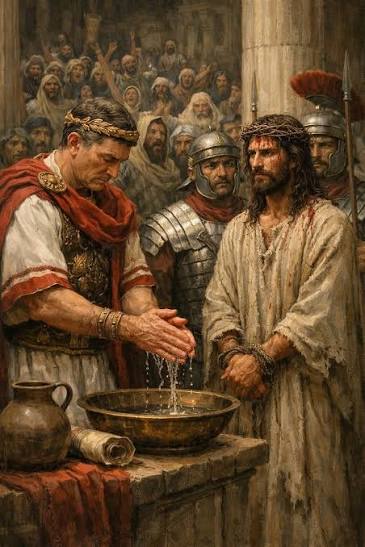
Why Did Pilate Wash His Hands? A Human Look at a Famous Decision

When Pontius Pilate stepped before the crowd and called for a basin of water, he was not doing something strange or irrational. He was doing something deeply, uncomfortably human. He was trying to escape responsibility without giving up power. That gesture — the washing of hands — has become one of history’s most recognized symbols of moral abdication. We still use the phrase today. “I wash my hands of it.” It means: this is not my fault. This is not my decision. The outcome is not on me. But is it? The Public Performance of Innocence What makes Pilate’s act so striking is that it was performed in front of a crowd. It was not a private moment of guilt. It was a public declaration. He had already made the decision. The soldiers were already there. The crucifixion was already in motion. The washing of hands did not stop anything. It was theater — a performance of innocence for an audience that knew, as did he, that innocence was not available to him at that moment. This is one of the central tensions explored in Thirteen Witnesses. Through the perspective of Claudia, the wife of Pilate, and Decimus, a Roman official present during the trial, the novel examines what it looks like to be close to power when power is being used wrongly. The Psychology of the Gesture Modern psychology has a name for what Pilate did: moral disengagement. It is the process by which people convince themselves that their involvement in a harmful outcome does not make them responsible for it. We tell ourselves: I was just following orders. I was just doing my job. I had no real choice. The decision was already made by someone else. Everyone else was going along with it. Sound familiar? These are not ancient rationalizations. They are active and common today — in institutions, in workplaces, in political systems, in online crowds. The mechanisms of self-justification have not changed in two thousand years. What Thirteen Witnesses Asks Peter Stephens, the author of Thirteen Witnesses, wrote this book partly in response to the modern epidemic of accepted misinformation — the way people absorb and repeat things they know, at some level, are not true. Pilate’s gesture is the ancient version of the same problem. He knew. His wife knew. The text of the Gospels records both of these facts. He acted anyway, and then he performed a ritual to separate himself from his own action. The book does not condemn Pilate simply. It presents the full human weight of his position: the political pressure, the threat to his career, the noise of the crowd, the silence of the accused. In that complexity, readers are invited to ask: have I ever washed my hands of something I knew was wrong? The Gesture That Didn’t Work History did not absolve Pilate. His name is embedded permanently in the Apostles’ Creed: “suffered under Pontius Pilate.” Two thousand years later, every recitation of that creed names him as the official authority under whose watch an innocent man was executed. He washed his hands. And the water did not help. If you want to sit with that discomfort — and explore it through thirteen human perspectives — Thirteen Witnesses is available now on Amazon.

Why Did Pilate Wash His Hands? A Human Look at a Famous Decision Read More »
images (1)

Who Are the 13 Witnesses of the Passion of Christ?

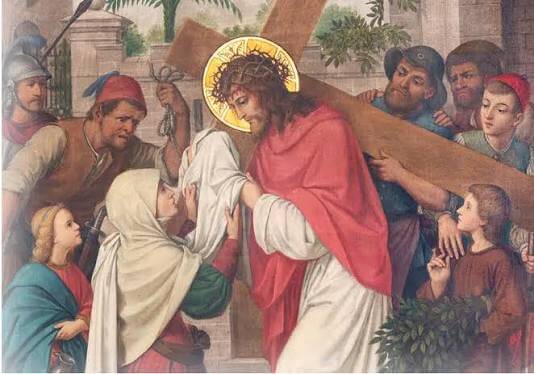
In the novel Thirteen Witnesses by Peter Stephens, the Passion of Jesus Christ is not observed from a single vantage point. It unfolds through thirteen distinct voices — each one a different kind of witness to the same events. Some are figures from Scripture. Others are fictional characters rooted in the historical and cultural reality of first-century Jerusalem. But every one of them faces the same confrontation: truth, standing before them, asking for a response. Here is a closer look at who they are. The Scriptural Witnesses Peter — The most famous of the witnesses. His denial of Christ in the courtyard is one of history’s most documented moments of fear. His testimony in the novel explores what it means to fail someone you love — and whether that failure defines you permanently. Judas Iscariot — His story raises questions that theology has wrestled with for centuries. Was his betrayal a choice, a compulsion, or something more complex? The novel allows his voice to speak without rushing to a verdict. Simon of Cyrene — He was not a disciple, not a follower, not even a sympathizer. He was simply a man in the wrong place. Compelled to carry the cross, he became part of the story against his will. What did he see? What did he feel? Claudia — The wife of Pontius Pilate, she appears briefly in Scripture as a woman who warned her husband about Jesus. In the novel, her perspective reveals the private conflict behind the most famous act of public abdication in history. Veronica — Drawn from Catholic tradition, she stepped forward in a moment of public cruelty to offer a cloth to a condemned man. Her action asks a simple but difficult question: when everyone else steps back, what makes one person step forward? The Fictional Witnesses Alon — A weaver who witnesses the arrest in Gethsemane. He is not a disciple, not an enemy, not even particularly religious. He is simply a man who happened to be present, and who could not look away. His testimony challenges us to consider what we do when injustice unfolds in front of us. Betzalel — A respected member of the Sanhedrin who participated in the condemnation of Jesus. He knew something felt wrong. He could feel it. And yet he protected his position. His story is the story of institutional loyalty overriding moral conscience — a dynamic that has repeated itself throughout history. Machla — The servant girl who recognized Peter. An outsider, a foreigner, a person of no social standing. She asked the simplest question imaginable: are you not one of his disciples? And her question triggered one of the most famous denials in history. Decimus — A Roman soldier of rank. A man of order and duty. Close enough to power to see its cracks. His loyalty to the system cost him the one thing no system can replace: his own conscience. The Fourteenth Witness Though the book is called Thirteen Witnesses, there is always an unspoken fourteenth: the reader. That is the design of the book. By the time you finish, you have heard thirteen testimonies and faced thirteen versions of the same question. What would you have done? Where would you have stood? Not every witness in the novel made the right choice. But every witness made a choice. And that, Peter Stephens suggests, is the point. Thirteen Witnesses is available now on Amazon. Visit the link below to order your copy.

Who Are the 13 Witnesses of the Passion of Christ? Read More »